
SCALE AI has co-funded over 200 AI projects and learned a great deal about planning for success in AI projects in the process.
Our experience shows that common project failure points are tied to assumptions made by teams in the planning process.
Assumption 1: Technical Success will naturally lead to Business Impact
When a proper scientific approach is chosen (based on proof-of-concept findings or literature review) and the right AI development profiles are assigned to execute the work, technical success is typically reliable.
The problem lies in not aligning model output to the operational impact to ultimately, P&L impact.
Without this 3-step measurement framework (detailed in our white paper Measure What Matters: A Three-Layer Measurement Framework for AI Projects) and then appropriate management, technical teams can claim victory while business teams are left scratching their heads.
Assumption 2: Datasets are ready because someone said they would be
By now, it’s common knowledge that data is a key input to a good quality AI model solution output.
What’s also common is misunderstanding or faulty assumptions around data being ready to feed the model.
Data quality, quantity, and availability must be validated before it can be considered ready to use.
Assuming a third party’s consent to provide data has already been secured. Assuming one person’s definition of ‘good quality’ matches another’s. Assuming two years of data is enough to train the model. These are the kinds of assumptions we’ve seen quietly derail AI projects.
Assumption 3: If the AI solution works, people will use it
Despite it being repeated over and over, that change management is critical to any technology project, this remains one of the most common failure points in AI projects.
Operators not being properly consulted in how processes actually work day-to-day, where the value in AI-assistance could be, explaining how the model will arrive at an output, etc.
Success is a team sport, and failure for technical and business teams to collaborate on the minutiae of what the solution will do, how it will do it, and finally how operators will integrate it into their workflow commonly leads to project failure.
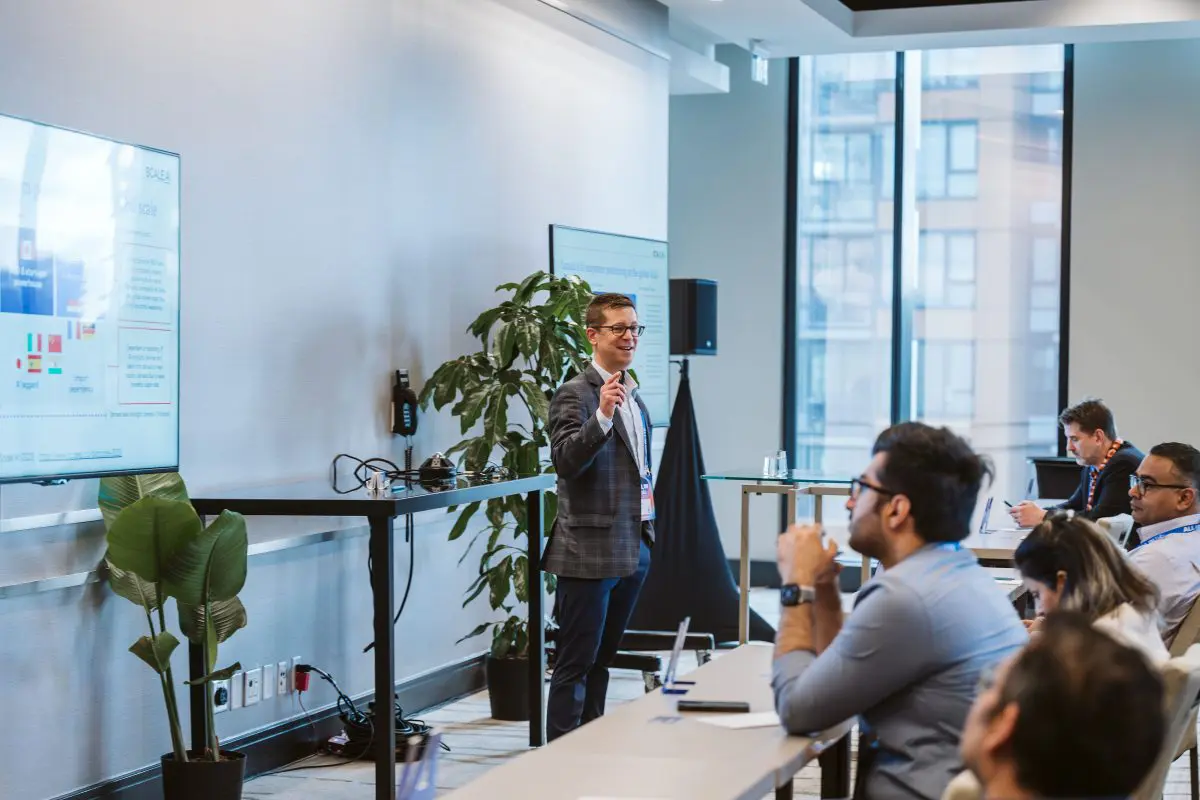
At ALL IN 2026, Sean Duckett, Senior Investment Director at SCALE AI will present “Planning for Success: Scale AI’s Framework for Evaluating AI Projects”. The goal of the session is to share SCALE AI’s experience and learnings so that business leaders can avoid some of the common pitfalls we’ve seen and help Canadian businesses increase likelihood of their projects being successful.
Register for ALL IN 2026 to attend the session!